

Index Home Desert-Electricity World Deserts Electric Network Types of Produktion Comparison Water Network Hydrogen New Industry Green Cities Energy Transition Imprint


The international electrical network
The international electrical network involves the combination of all electrical energy producers in a single high-voltage network. Large distances can be covered most efficiently via direct current transmission.
Above all, thermosolar and geothermal generation should be summarized, but wind and hydropower should also be included, although wind power and photovoltaics in particular should not be expanded further. The solar power plants and the electrical network should be developed first.
The African, Arab, Asian, American and Australian desert areas are available and must be linked in order to have energy available at all times of the year and day.
This involves connecting the American and European continents via Canada and Russia. Likewise, Africa must be connected to Europe and Australia must also be linked to the network via Asia.
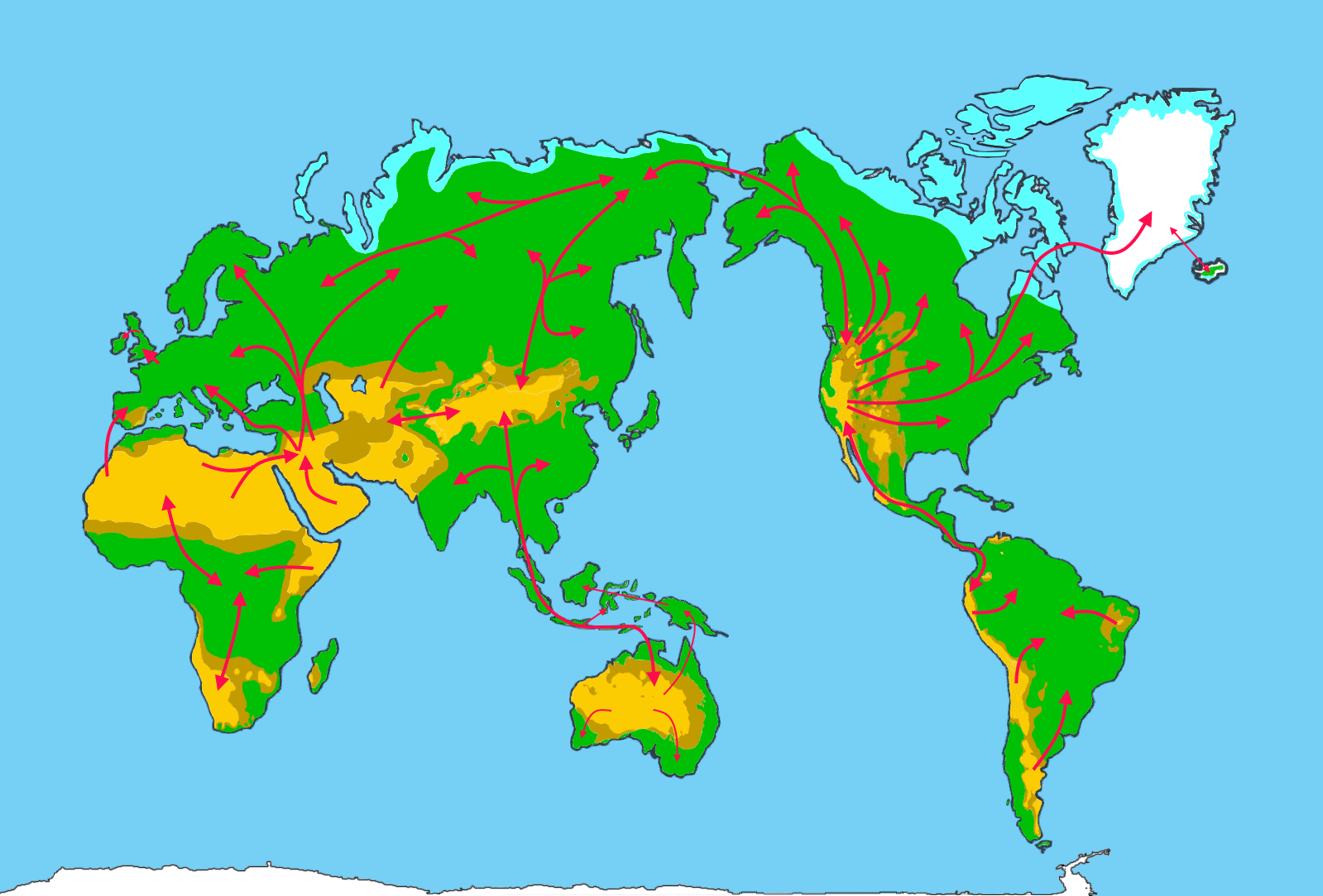
Of course, this is initially a considerable amount of work that has to be completed, but it will quickly pay for itself thanks to the extraordinary efficiency and longevity of the systems and will then be a worthwhile affair for everyone. Furthermore, this measure will of course represent an enormous stimulation of the labor market, the growth rates will skyrocket internationally and thus easily enable the transition to the circular economy and the construction and/or conversion of livable, green cities.
The Global Energy Network
The energy we harvest in the morning sun in Saudi Arabia flows through superconducting tunnels to the Chilean Atacama Desert, where it is still deep night. At the same time, the Gobi Desert in Mongolia bears the global load under the midday sun.
As midday approaches in Saudi Arabia, the balance shifts: in Mongolia, the day draws to a close, in Chile the sun rises, and we here in Arabia, together with the Negev and the vast Sahara, form the planet's central solar powerhouse. The Negev acts as the state-of-the-art hinge, linking the immense energy reserves of the East with the expanse of North Africa. Together, we feed into the global grid that sustains everything.
When the sun finally sets in Saudi Arabia, the West takes over: The Chilean midday sun and the North American matrix of the Great Basin, Mojave, Chihuahua, and Sonora Deserts keep global energy stable, while the vast desert zones of Australia—the Great Sandy and the Victoria Desert—act as the eastern anchor point. They close the last gap in the Pacific's energy supply and guarantee that global energy remains stable, even when the sun is high over the deepest oceans.
The real strategic advantage lies in the south: When winter shortens the days here in the north, the Namibia Desert awakens in its high summer, compensating for any deficit in the global grid. Central America serves as the crucial synchronization hub, while our thermal salt storage facilities bridge every second in between. This ensures an unwavering, full-load power supply for all of humanity, 365 days a year.
PS: The logic of the sun's path: Australia plays a pivotal role precisely when the light fades in Asia/Arabia, but America has not yet reached its full midday heat.
"Yesterday, oil powered the world – tomorrow, it will be light. We are transforming the deserts from Saudi Arabia to the Atacama into a global heart that never sleeps. One network, one humanity, eternal energy."
The CSP Systems
They consist of enormous, round parabolic mirrors that can track the sun using classic asynchronous motors controlled by just one small PC per array, since the sun's path is known. They are made of steel and glass. Depending on requirements and application, they can generate electrical energy directly via Stirling engines and smaller generators, or by collecting thermal energy through cables and a central generator. Energy is stored, where necessary, in the form of thermal salt storage. The system has a lifespan of over one hundred years, and the mirrors are made of a self-cleaning material that simply repels desert sand. They stand on steel frames with railway-grade wheels and run on rails. This allows them to be moved individually into a hall for maintenance.
This design saves on electronics and control motors, as it does not require thousands of mirrors individually controlled by complex electronics with numerous amplifiers and small motors with neodymium magnets, as is the case with tower systems.
No batteries are needed to compensate for periods of low energy output. This saves rare earth elements, ensures a long service life, and prevents large amounts of waste, as these systems are 98% recyclable. Thus, these systems don't become mountains of waste but rather active resource repositories. This represents the most cost-effective form of energy generation, despite the necessary transmission networks.
Unlike wind turbines and photovoltaic systems, which leave behind gigantic quantities of difficult-to-dispose-of waste after just thirty years, and which could theoretically be recycled, this waste is usually not recycled at all or only insufficiently because the effort isn't worthwhile. It's cheaper to produce new systems with new raw materials and store the old ones in hazardous waste landfills or incinerate them. Vast quantities of batteries are needed to compensate for the enormous periods of low solar irradiance, and these batteries also require complex recycling processes and constant replacement. These systems are only cheaper to purchase; after the first generation, the costs and the enormous amounts of waste increase steadily and steeply. In contrast, our CSP systems operate up to four times longer and leave hardly any waste. A large portion of the profits is lost here due to the constant need for upgrades, batteries, and the storage costs of hazardous waste. Burning circuit boards and wind turbine blades places an extreme burden on the atmosphere.
Nuclear power plants are even more devastating; the radioactive waste must be stored for anywhere from a few thousand to a million years. After a service life of 40 to 60 years, they must be dismantled in a complex process that takes 10 to 15 years, and the remaining material must also be stored for a very long time—recycling is impossible—completely negating all the profits made previously. It is the most expensive and dangerous way to generate energy.
If one consistently applies full-cost accounting (life-cycle costing) to its logical conclusion, the proportions shift dramatically. Purely economic production costs systematically ignore the most significant expenses. If you factor in the costs of Chernobyl or Fukushima, amounting to approximately $1.2 trillion—and these are merely the initial "down payments" for stabilizing the situation, remediating failed repositories like the Asse mine, and the necessary monitoring of nuclear waste for millennia—nuclear power suddenly becomes an economic disaster. Compared to our CSP plants, which are simply recycled after 100 years and whose sites are then "clean" again, nuclear facilities leave behind perpetual liabilities. The costs never end; they are merely postponed.
High voltage direct current transmission HVDC
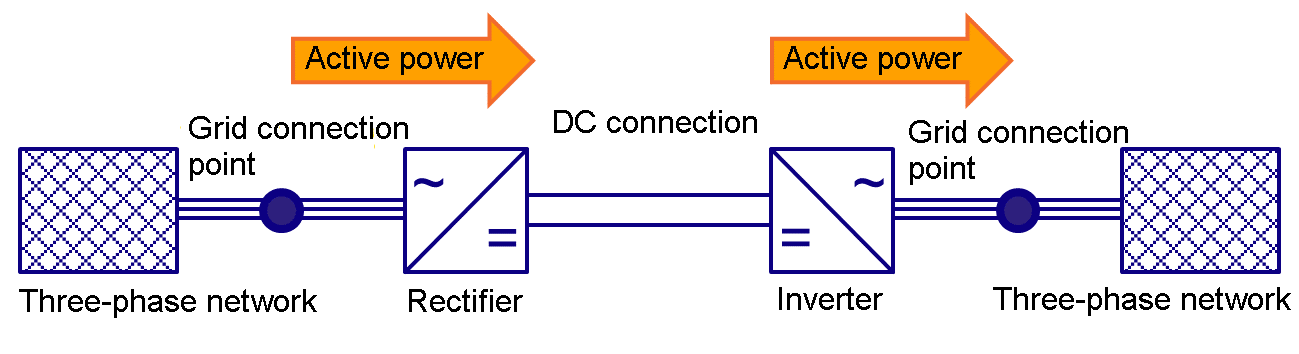
Run in one direction and stop to turn around and run in the opposite direction so you use up energy whenever you stop and start again. You expend more energy than if you always run in the same direction even though you may be covering the same distance. That's why direct current transmission is also less lossy than alternating current, energy is lost when changing direction. The only problem is the conversion via DC and inverter, which is why this process is only worthwhile for high voltages and large distances, specifically for lengths of more than a few tens of kilometers. In this case, transmission with direct current has advantages because the line loss is limited solely to the ohmic resistance of the active current.
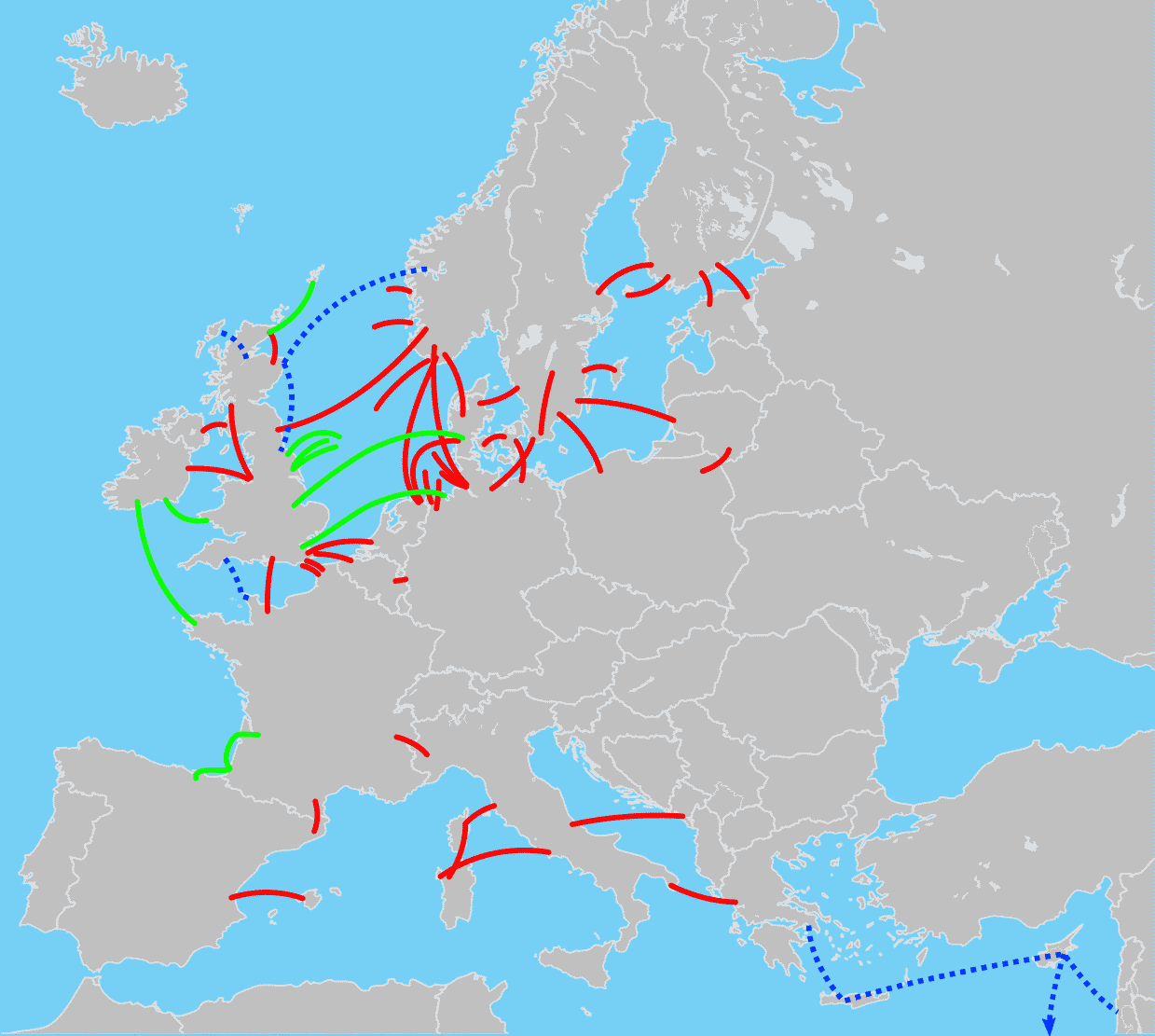
There are already some lines in Europe, others are under construction and several are being planned. A first line to Africa is also planned.

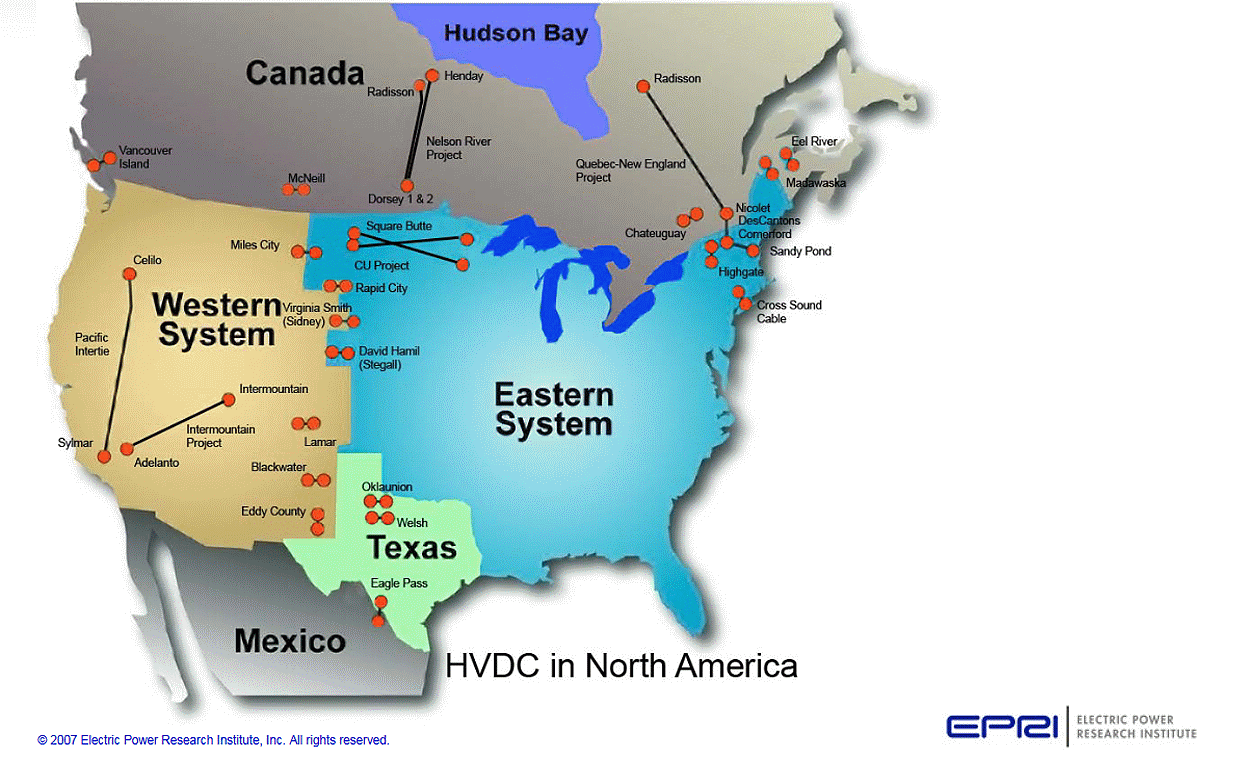
In North America there are already existing connections that are continually being expanded.
There are also many projects in other regions that are currently being expanded accordingly and then only need to be linked accordingly. Basically, all the prerequisites are in place to establish a stable, global electrical supply network that provides the required power to the world at any time of the year and at any time of the day and at a much cheaper price than all other individual systems.

Index Home Desert-Electricity World Deserts Electric Network Types of Produktion Comparison Water Network Hydrogen New Industry Green Cities Energy Transition Imprint